How to Choose a Reliable Non Woven Fabric Supplier?
Choosing a reliable supplier is not a cosmetic decision. It affects product safety, production continuity, and customer trust.
The global non woven fabric industry continues to expand across hygiene, healthcare, filtration, construction, and transportation. Grand View Research estimated the global market at approximately USD 53.56 billion in 2023. Its report also projects continued growth through 2030. Smithers’ “The Future of Nonwovens to 2028” identifies hygiene products, medical applications, and filtration as important demand areas. These figures indicate opportunity, but they do not prove that every supplier is dependable.
Quality needs evidence.
INDA President Dave Rousse has described nonwovens as “engineered materials designed for specific end uses.” That principle matters when comparing suppliers. A qualified partner should provide traceable raw-material information, technical data sheets, test results, production capacity, and realistic lead times. Visit the factory when possible. Examine roll consistency, edge quality, packaging, and storage conditions. Ask how the supplier handles rejected batches. Their answer may reveal more than a polished brochure.
Certifications also require careful review. ISO 9001 can support process control, but it does not guarantee every fabric will meet your specification. Ask for current certificates, laboratory reports, and batch-level inspection records. Confirm whether testing comes from an independent laboratory. Small details matter.
No checklist is flawless.
Price alone can mislead. A cheaper roll may create higher waste, machine downtime, or product complaints. My practical view is simple: select the supplier that can repeatedly prove performance, communicate clearly, and admit limitations. Reliability is demonstrated over shipments, not promised in emails.
Define Your Non Woven Fabric Requirements and Quality Standards
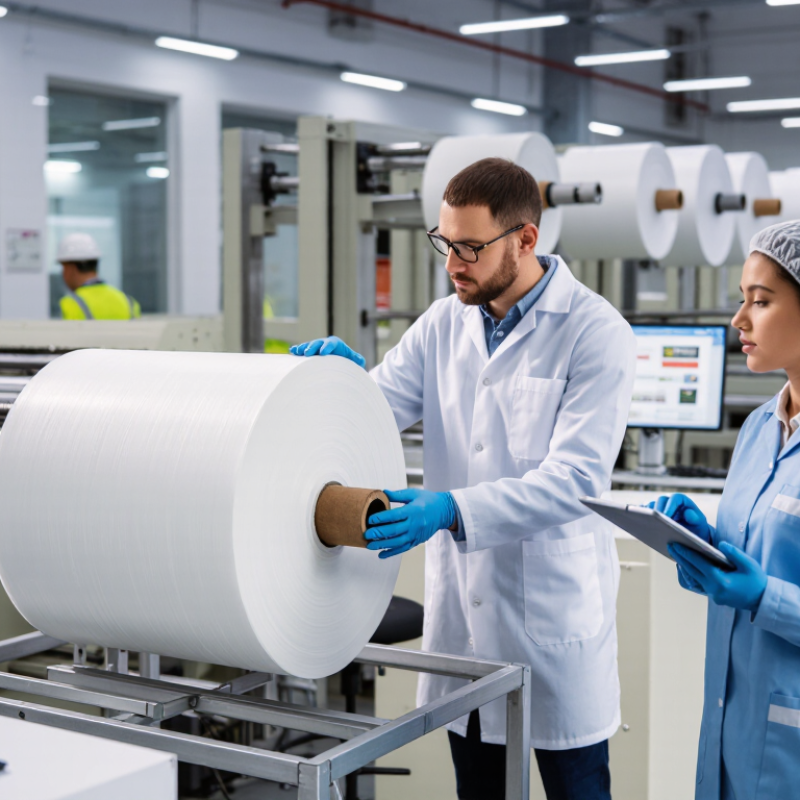
Before choosing a non woven fabric supplier, define the material your product truly needs. Record the fiber type, fabric weight, width, roll length, color, and intended application. Details matter. A medical cover, shopping bag, and filtration layer require different performance standards.
Set measurable quality requirements instead of using vague terms like “strong” or “soft.” Specify tensile strength, tear resistance, thickness, moisture behavior, air permeability, and dimensional tolerance. Include acceptable limits and testing methods. Ask for evidence. A capable supplier should provide recent test reports, production samples, and clear batch specifications. Independent laboratory results can add confidence when performance is critical.
Evaluate whether the supplier can maintain consistency at commercial volume. Request a sample roll, inspect its surface, and compare weight across several points. Check how materials are traced from raw fiber to finished rolls. Experienced suppliers should explain their inspection process without avoiding difficult questions. I have learned that attractive samples can hide uneven production. That risk deserves attention. Keep a written approval sample and define what happens when a batch falls outside tolerance. Regular communication also matters, especially when specifications change. A reliable partnership depends on honest records, realistic lead times, and the willingness to correct mistakes.
Check the Supplier’s Production Capacity and Technical Expertise
How to Choose a Reliable Non Woven Fabric Supplier?
A reliable supplier should show more than an impressive monthly output. Ask how many production lines are operating, what materials they process, and how quickly they can replace a damaged machine. A supplier producing 500 tons monthly may still struggle with a sudden 20-ton order. Numbers can look impressive. Request recent production records, shipment schedules, and capacity plans for peak seasons. Check whether backup equipment, trained operators, and sufficient raw material storage are available. These details reveal whether the factory can maintain steady delivery instead of making promises.
Technical expertise matters just as much as capacity. The supplier should understand GSM control, tensile strength, elongation, air permeability, and thermal bonding. Ask for test reports from several production batches, not only one carefully selected sample. An experienced engineer can explain why a fabric becomes uneven, weak, or too stiff. Clear answers are valuable. Vague answers are warning signs. Review their quality procedures, calibration records, batch traceability, and corrective-action reports. A capable team should also adjust production for different applications without losing consistency.
A factory visit can make the evaluation more practical. Observe the winding area, laboratory, storage conditions, and operator training. I would not reject a supplier because every process looks perfect; real factories have occasional defects. However, they should identify problems quickly and record how they were corrected. I once underestimated the importance of maintenance records, and that mistake caused avoidable delays. A better review checks both technical skill and the supplier’s honesty when production does not go as planned.
How to Choose a Reliable Non Woven Fabric Supplier? - Check the Supplier’s Production Capacity and Technical Expertise
Use the following measurable criteria to compare non woven fabric suppliers before placing a commercial order. Capacity figures should be verified through production records, equipment lists, quality documents, and sample testing.
| Evaluation Dimension | Recommended Benchmark | Why It Matters | Evidence to Request | Risk Signal |
|---|---|---|---|---|
| Installed Production Capacity | Capacity should exceed the expected order volume by at least 20% to 30%. | A capacity buffer helps reduce delays caused by maintenance, seasonal demand, or raw-material interruptions. | Monthly production plan, machine list, line specifications, recent capacity-utilization records, and an on-site or video factory audit. | Capacity is described only with vague terms such as “large scale,” without production records or identifiable equipment. |
| Production Line Type | The line should match the required process, such as spunbond, meltblown, spunlace, needle-punch, or thermal bonding. | Different processes produce different strength, softness, filtration, absorbency, and thickness characteristics. | Process flow chart, equipment specifications, material compatibility list, and samples made on the same production line. | The supplier offers every fabric type but cannot explain process limitations or material-specific parameters. |
| Production Flexibility | The supplier should support the required width, basis weight, color, roll length, and packaging format within documented tolerances. | Flexible equipment reduces the need for secondary processing and makes repeat orders more consistent. | Available width range, basis-weight range, changeover procedure, minimum order quantity, and examples of customized production. | Customization is accepted before technical review, but the supplier later adds undisclosed surcharges or rejects the specification. |
| Lead-Time Control | A reliable supplier should provide a written lead-time range and a production schedule for each order stage. | Clear scheduling helps buyers coordinate converting, shipping, inventory, and customer delivery commitments. | Sample lead time, bulk-production lead time, order milestone schedule, holiday policy, and documented delay-notification process. | Lead times change frequently, or the supplier cannot distinguish sampling, production, inspection, and dispatch time. |
| Raw-Material Management | Critical raw materials should have approved specifications, incoming inspection, and more than one qualified source where practical. | Polymer, fiber, additive, and recycled-content variation can directly affect basis weight, strength, color, and processing performance. | Raw-material specifications, supplier-approval procedure, incoming inspection records, storage conditions, and traceability documents. | Materials are purchased only after receiving an order, or the supplier cannot identify the raw-material grade used in samples. |
| Technical Team Expertise | The supplier should have dedicated personnel for process engineering, quality control, and product development. | Technical expertise is needed to convert application requirements into stable fabric specifications and production settings. | Organization chart, engineer experience summary, technical questionnaire responses, trial records, and documented corrective actions. | Sales staff provide technical answers without measurable specifications, test data, or engineering review. |
| Process Parameter Control | Key parameters should be defined, monitored, and recorded for every production batch. | Controlled temperature, speed, pressure, fiber distribution, and bonding conditions improve lot-to-lot consistency. | Control plan, batch records, calibration certificates, process inspection forms, and statistical trend reports. | Quality is checked only at the end of production, with no records showing how process variation is controlled. |
| Testing Capability | The supplier should test the properties relevant to the application, not only appearance and weight. | Performance requirements may include tensile strength, elongation, tear strength, air permeability, absorbency, filtration, or hydrostatic pressure. | Test-equipment list, calibration records, internal test methods, representative reports, and independent laboratory results when required. | Reports lack test standards, sample conditioning details, test dates, or batch identification. |
| Specification Tolerances | The quotation and purchase order should state measurable tolerances for basis weight, thickness, width, strength, color, and roll length. | Defined tolerances create an objective basis for acceptance, claims, and corrective action. | Technical data sheet, approved sample, inspection standard, certificate of analysis, and signed product specification. | Terms such as “premium quality” or “standard weight” are used without numerical limits. |
| Quality Management System | A documented quality system should cover incoming materials, production, final inspection, nonconformance, and traceability. | Systematic controls are more dependable than final visual inspection alone. | Quality manual, internal audit records, nonconformance reports, corrective-action examples, and applicable management-system certificates. | Certificates are provided without scope, validity information, issuing body, or supporting operating records. |
| Batch Traceability | Each roll or carton should be traceable to a production date, machine, raw-material lot, and inspection record. | Traceability enables fast investigation and limits the impact of a quality issue. | Roll labels, batch-number rules, warehouse records, production logs, and a mock traceability exercise. | The supplier cannot trace a delivered roll back to its production and inspection records. |
| Sample-to-Bulk Consistency | The approved sample should be produced with the same materials, process, and quality limits intended for bulk production. | A laboratory sample made under special conditions may not represent normal commercial production. | Sample approval record, first-article report, pre-production sample, retained bulk sample, and comparison test results. | The supplier changes raw materials, equipment, or construction after sample approval without written authorization. |
| Corrective-Action Capability | Nonconformities should be investigated with root-cause analysis and a documented corrective-action deadline. | Effective corrective action prevents repeated defects instead of treating each complaint as an isolated event. | Anonymized corrective-action reports, root-cause analysis, containment plan, verification results, and responsible-person assignment. | The supplier offers replacement material but cannot explain the cause or prevention plan. |
| Application-Specific Knowledge | The technical team should understand the end-use requirements, converting method, regulatory needs, and storage conditions. | Fabric that is suitable for hygiene products may not be suitable for filtration, medical packaging, agriculture, or construction. | Application questionnaire, recommended construction, compatibility guidance, processing limits, and relevant performance data. | The supplier recommends a product based only on price or basis weight without reviewing the end use. |
| Supplier Verification Score | Use a weighted score: capacity 25%, technical expertise 25%, quality system 20%, testing 15%, delivery control 15%. | A weighted assessment prevents a low price or attractive sample from hiding weaknesses in production and engineering capability. | Completed audit checklist, sample-test comparison, production verification, reference-project evidence without confidential customer information, and management approval. | The decision is based solely on quotation price, sales claims, or a single unverified sample. |
Note: The benchmarks above are practical purchasing guidelines rather than universal legal requirements. Final acceptance criteria should be agreed in writing according to the fabric’s end use, applicable standards, and customer specifications.
Verify Material Quality, Certifications, and Testing Procedures
Choosing a reliable non woven fabric supplier starts with evidence, not polished samples. Ask for fiber composition, fabric weight, thickness, tensile strength, and air permeability data. Request a recent production sample. Compare its texture, odor, color consistency, and edge stability with the specification sheet. A roll that feels soft may still tear under load. This is where many buyers misjudge quality. Small details matter.
Review certifications carefully. Check the issuing body, certificate number, scope, and expiry date. The certificate should cover the actual factory and requested material, not a related company. For recycled or medical-use claims, request supporting chain-of-custody or product documentation.
Confirm whether testing follows recognized methods, such as ISO, ASTM, or EN standards. Standards alone do not prove every batch is consistent. Ask for batch records and a certificate of analysis. Keep copies.
A dependable supplier explains its testing process without hesitation. Ask how samples are conditioned, how many specimens are tested, and how failed results are handled. Useful checks may include tensile strength, tear resistance, thickness, basis weight, absorbency, and microbial barriers where relevant. Request an independent laboratory test for the first order or any high-risk application. I have learned that supplier-provided results can be accurate yet incomplete. A missing test is not automatically a failure, but it deserves a written explanation. Visit the plant if possible, and observe calibration labels, sample storage, and inspection records. Trust grows through repeatable evidence, not promises.
Evaluate Pricing, Minimum Orders, Lead Times, and Logistics
Choosing a reliable nonwoven fabric supplier requires more than comparing the lowest quotation. In production, the cheapest roll can become expensive when weight, width, or fiber content varies. Ask for a written quotation showing material grade, basis weight, roll length, packaging, testing, and delivery terms. Request recent samples, then compare them under your actual cutting, sewing, or filtration conditions. Samples can mislead.
Pricing should be linked to order volume, payment terms, tooling, and customization charges. A supplier that explains every fee is easier to manage than one offering a vague “all-in” figure. Check minimum order quantities by color, width, and production batch, because one large MOQ may hide several smaller commitments. If demand is uncertain, negotiate a trial order or staggered shipment, even if the unit price rises slightly. That trade-off may protect cash flow.
Confirm lead times in writing, including sample approval, raw-material preparation, production, inspection, and port handling. Ask how delays are reported and whether capacity is reserved for repeat orders. For logistics, verify roll dimensions, pallet limits, loading methods, export documents, and the agreed delivery term. A dependable supplier shares inspection records and shipment updates without repeated pressure. Promised dates are not schedules until responsibilities are clear. Leave room for seasonal congestion and your own approval delays. No plan is perfect.
Assess Communication, Customization, and Long-Term Reliability
How to Choose a Reliable Non Woven Fabric Supplier?
Reliable sourcing begins with communication, not a low quotation. During supplier audits, I check reply speed, technical accuracy, and ownership of problems. A dependable supplier confirms fabric weight, width, raw material, tolerance, and delivery dates in writing. Silence creates risk.
Customization also reveals technical competence. Ask for a small trial roll before approving full production. Review GSM, tensile strength, elongation, air permeability, color consistency, and packaging details. The supplier should explain how each change affects cost and performance.
According to Smithers’ 2024 report, the global nonwoven market was worth approximately US$54 billion in 2023 and may exceed US$75 billion by 2028. This growth increases capacity, but it does not guarantee careful service.
Look beyond samples. Request batch records, inspection procedures, test reports, and a clear corrective-action process. The 2024 INDA Global Nonwovens Industry Outlook identifies hygiene, filtration, and medical applications as major demand areas, where stable quality matters greatly. Ask how the supplier handles raw-material shortages, rejected rolls, and urgent revisions.
A factory that answers with evidence is more trustworthy than one offering impressive promises. Very few partnerships run perfectly.
I once underestimated the value of weekly production updates; a minor packing change later caused avoidable delays. That mistake still matters.
Long-term reliability comes from transparent records, realistic lead times, consistent testing, and communication that continues after the purchase order.
Related Posts
-
Why Is Non Woven Fabric So Popular?
-
What Is the Non Woven Fabric Industry and How Does It Work?
-
How to Find Reliable Non Woven Fabric Suppliers?
-
7 Tips About Non Woven Fabric for Global Buyers?
-

Why Non Woven Fabric is Revolutionizing Industries and Everyday Products
-
Top 10 Facts You Should Know About Non Woven Fabric?