Top 10 Tips for Choosing Nonwoven Manufacturers for Your Business?
Choosing the right nonwoven manufacturers is crucial for businesses in various industries. High-quality nonwoven fabrics are essential for products ranging from hygiene items to automotive components. The selection process can be overwhelming, given the numerous manufacturers available. It requires careful consideration of multiple factors.
Experience and expertise play key roles in identifying reliable manufacturers. In this competitive market, many companies promise excellent products, but not all can deliver. Researching a manufacturer's credentials and reputation can prevent costly mistakes. Engage with reviews, industry reports, and case studies to assess their reliability.
It’s also important to consider the manufacturer’s innovation and technology. Some nonwoven manufacturers may lack the latest production techniques or environmentally friendly practices. A manufacturer’s commitment to sustainability can reflect its long-term viability. Evaluating these aspects not only enhances product quality but also aligns with customer values.
Evaluating Quality Standards in Nonwoven Manufacturing
When selecting a nonwoven manufacturer, evaluating quality standards is crucial. Look for certifications that demonstrate compliance with industry norms. ISO certifications are a strong indicator of a manufacturer's adherence to quality. Additionally, consider their production processes. A well-documented process can often signify attention to detail.
Quality assurance measures play a vital role in ensuring product reliability. Ask about their testing methods and quality control protocols. Manufacturers should conduct regular audits and inspections. It's important to verify this information rather than take it at face value. Consistency in product quality is not always guaranteed, so choose manufacturers who welcome scrutiny.
Building a relationship with a manufacturer involves trust. This trust needs to be built on transparent communication about quality issues. If concerns arise, how they handle these situations can reflect their commitment to quality. A responsive manufacturer that values feedback can significantly impact your business. Scrutinize their history and reputation in the industry before making a final decision.
Assessing Manufacturer Experience and Market Reputation
When selecting nonwoven manufacturers, assessing their experience and market reputation is crucial. Experienced manufacturers often have a proven track record. They understand the nuances of material selection and production processes. For instance, a company with years in the industry has likely encountered various challenges. This experience equips them to offer valuable solutions, improving your supply chain efficiency.
Market reputation can reflect quality and reliability. Reviews and testimonials from previous clients provide insights into a manufacturer's performance. Look for consistent feedback about product durability and service responsiveness. A manufacturer’s presence at trade shows or industry forums can indicate their engagement and commitment to the industry.
However, not all well-known names guarantee quality. Some manufacturers may rely on their history rather than innovation. Researching their recent projects can be revealing. Are they keeping up with industry trends? Ensure that the manufacturers you consider are adapting to new technologies and customer needs. It's these proactive approaches that distinguish the most reliable partners.
Understanding Material Types and Production Techniques
Understanding material types is crucial when selecting nonwoven manufacturers. Nonwoven fabrics vary in composition, each with unique characteristics. Common materials include polypropylene, polyester, and rayon. Each has its benefits pertaining to strength, flexibility, and absorbency. For medical applications, some materials are treated for antimicrobial properties, while others may be designed for biodegradable use. Knowing these distinctions will guide your selection process.
Production techniques also play a significant role. There are several methods, such as spunbond, meltblown, and needlepunch. Spunbond creates strong, durable fabrics. Meltblown offers finer fibers, ideal for filtration, like face masks. On the other hand, needlepunch provides different textures and densities. Insight into these processes can enhance your understanding of the end-use applications.
However, it's essential to reflect on potential challenges. Not all manufacturers have the same level of expertise in these techniques. Some may lack quality control measures, impacting the final product. Questions about their production capabilities should be addressed. Engaging in discussions about standards and certifications can provide clarity.
Top 10 Tips for Choosing Nonwoven Manufacturers for Your Business
| Tip No. |
Tip Description |
Material Types |
Production Techniques |
Quality Certifications |
| 1 |
Research and compare manufacturers |
Polypropylene, Polyester |
Spunbond, Meltblown |
ISO 9001, CE |
| 2 |
Evaluate production capacity |
Biodegradable materials |
Carded, Needle-punched |
Oeko-Tex, Global Recycle Standard |
| 3 |
Assess design flexibility |
Vegan leather alternatives |
Heat bonding, Chemical bonding |
FDA Compliance, REACH |
| 4 |
Check for sustainability practices |
Eco-friendly nonwovens |
Thermal bonding, Airlaid |
ISO 14001 |
| 5 |
Analyze lead times and logistics |
Spunlace |
Wetlaid, Bonded |
Certifications per region |
| 6 |
Assess customer support and communication |
Flame retardant nonwovens |
Composite techniques |
ISO 45001 |
| 7 |
Review past projects and references |
Activated carbon nonwovens |
Wetlaid, Needlepunch |
SGS testing |
| 8 |
Inspect samples and prototypes |
Natural fiber composites |
Spunbond, Meltblown |
ISO 13485 |
| 9 |
Negotiate pricing and terms |
Recycled nonwovens |
Carded, Airlaid |
Bureau Veritas |
| 10 |
Finalize contracts and agreements |
Medical grade nonwovens |
Composite techniques, Thermal bonding |
ISO 14971 |
Exploring Pricing Structures and Minimum Order Quantities
When selecting a nonwoven manufacturer, understanding their pricing structures is crucial. Many manufacturers offer tiered pricing based on volume. Smaller orders may cost more per unit. You might find that a minimum order quantity helps reduce overall costs, but it can be risky if your demand is unpredictable. Assess how their pricing aligns with your budget and sales projections.
Minimum order quantities (MOQs) can also significantly impact your purchasing strategy. A high MOQ might lead to excess inventory if sales slow down. Conversely, low MOQs can provide flexibility but often come with higher prices. It's important to strike a balance. Some manufacturers may negotiate MOQs or offer samples. This allows you to test product quality without committing to large orders.
Reflection is key in this process. You might realize that your immediate cost-saving measures can lead to challenges later. A thorough evaluation of costs versus quality can save you from headaches in the future. Make sure you have clear communication with your chosen manufacturer to avoid misunderstandings about pricing and order sizes. This will create a reliable partnership and enhance your business's stability.
Requesting Samples and Evaluating Customer Support Services
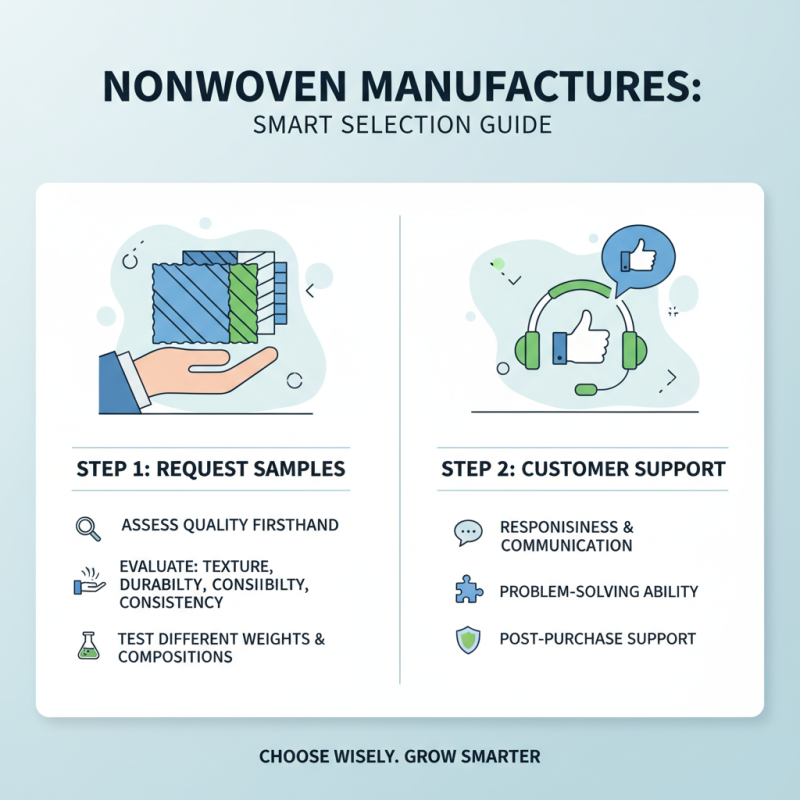
When choosing nonwoven manufacturers, requesting samples is a critical step. This allows you to assess the quality of their products firsthand. When evaluating samples, consider factors such as texture, durability, and consistency. A well-made nonwoven fabric should feel appropriate for your needs. Request different weights and compositions to understand their capabilities better.
Customer support services play a significant role. Reliable manufacturers should respond promptly to inquiries. Check their willingness to provide information about their processes. This reflects their commitment to transparency. A manufacturer with excellent support can address any concerns you may have. Be aware that not all manufacturers prioritize customer service equally. Take time to gauge their approach before making a decision.
It's vital to consider the overall experience of a manufacturer. Factors like turnaround time and delivery reliability matter too. If delays occur, find out how they handle communication. This can be telling about their operational efficiency. Reflect on these details carefully. They will impact your partnership quality in the long run.