10 Essential Tips for Choosing a Non Woven Fabric Making Machine
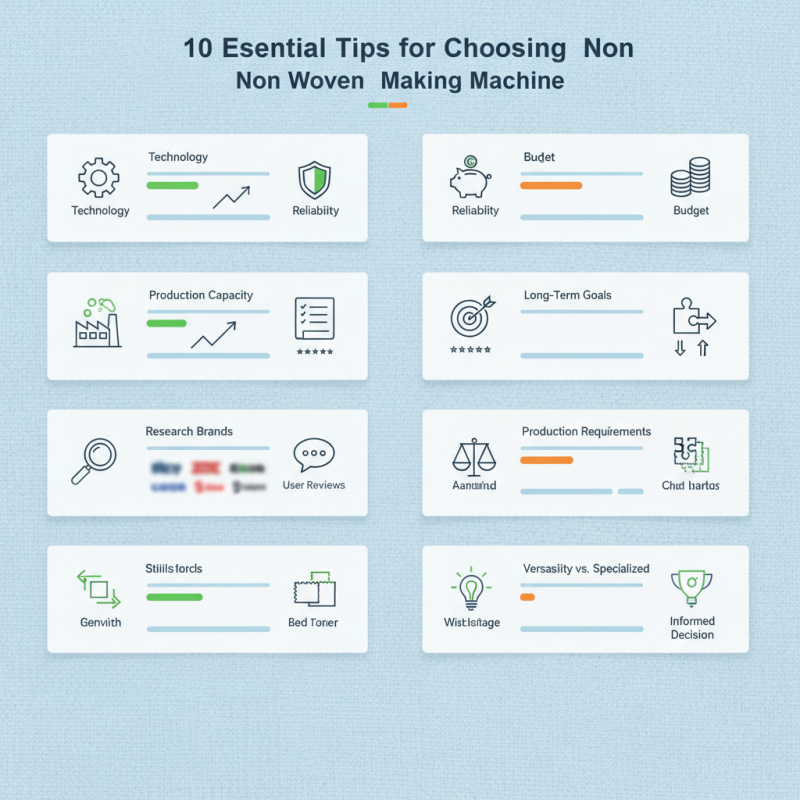
Choosing the right non woven fabric making machine is crucial for success in the textile industry. With many options available, it can be overwhelming. Key factors include technology, production capacity, and reliability. A machine must meet your specific needs and production scale.
Consider your budget and long-term goals. Investing in a high-quality machine can save costs and improve efficiency. Researching different brands and models can provide valuable insights into their performance and durability. User reviews often reveal strengths and weaknesses not apparent in specifications.
Reflect on your production requirements. Are you focused on versatility or specialized applications? Each choice affects material quality and output. It’s essential to weigh the pros and cons of each machine. Making an informed decision can lead to a significant competitive advantage in the market.
Understanding Non Woven Fabric and Its Applications
Non woven fabrics have gained popularity due to their versatility and wide range of applications.
These fabrics are made by bonding fibers together through various methods, such as heat or chemical processes.
They offer durability, breathability, and resistance to tearing, making them ideal for various uses.
Common applications include medical supplies like masks and gowns, filters, and packaging materials.
Understanding the characteristics of non woven fabrics is essential when considering their applications.
For instance, the choice of fibers and the bonding technique can significantly impact the fabric's properties.
Some non woven fabrics may lack strength or absorbency, which might not meet specific needs.
This requires careful consideration, especially in high-stakes environments.
Investing in the right fabric-making machine is crucial.
The machine must align with your desired output and fabric quality. Each method of production has its own set of advantages and drawbacks.
This decision-making process can be complicated yet essential for those entering the non woven fabric market.
Balancing efficiency and product quality is key.
Key Features to Look for in Non Woven Fabric Machines
When selecting a non-woven fabric making machine, it's essential to consider key features that impact efficiency and output. Look for machines that offer adjustable speed settings. This flexibility allows for better control over the production process, particularly when handling intricate designs. A report by the Nonwoven Fabrics Association highlights that efficiency can be improved by up to 20% with speed adjustments.
Another important feature is the machine's versatility. Machines that can produce different types of non-woven fabrics—like spunbond, meltblown, or needle-punched—provide greater market opportunities. In a rapidly evolving industry, adaptability can mean the difference between thriving or struggling. Consider machines with user-friendly interfaces. Operators should navigate functions easily to minimize training time.
Further, assess the durability of the machine. A solid construction ensures longevity and consistent performance. Many industry professionals note that investing in robust machinery can yield better long-term returns. Balancing cost with quality is crucial, yet many buyers overlook this point. Taking time to evaluate the warranty options can also reveal the manufacturer's confidence in their product's reliability.
Comparing Different Types of Non Woven Fabric Making Machines
When choosing a non-woven fabric making machine, it’s crucial to explore various types. Different machines offer unique benefits and features. For instance, spunbond machines are known for their high-speed production. They create strong, lightweight fabric suitable for diverse applications. On the other hand, meltblown machines excel at producing fine fibers. This is ideal for filtration products, like masks and air filters. Understanding these distinctions helps manufacturers decide what best suits their needs.
Another important aspect is the machine’s capacity and efficiency. Some machines can produce at high volumes, which may suit larger operations. However, this might not be necessary for smaller manufacturers. Evaluating your business scale is essential. Additionally, consider the maintenance and energy consumption of these machines. Flaws in energy efficiency can lead to increased operational costs. Reflect on how often you can perform repairs as well. Sometimes, the best choice is not always the machine with the most features. It might be about balancing your production needs and budget effectively.
Evaluating Production Capacity for Your Business Needs
When evaluating production capacity for a non-woven fabric making machine, it's crucial to align the machine's output with your business needs.
Consider the scale of your operations and the anticipated demand for your products. For example, a small startup might require a machine with a lower output, while a larger enterprise needs one with high production rates.
Assess the specifications of the machines. Check the maximum output per hour and ensure it fits your target production volume. Pay attention to the machine's versatility as well. It should be capable of producing different fabric types to cater to varying customer preferences. A flexible machine can save costs and adapt to changing market trends.
Remember, every production line has its limitations. Sometimes you may overestimate your needs, leading to underutilization of resources. Reflect on past experiences where you faced production bottlenecks. Learning from those situations will help you make informed decisions. Balancing capacity with demand is a continuous challenge that requires ongoing evaluation and adjustment.
Cost Considerations and Budgeting for Your Machine Purchase
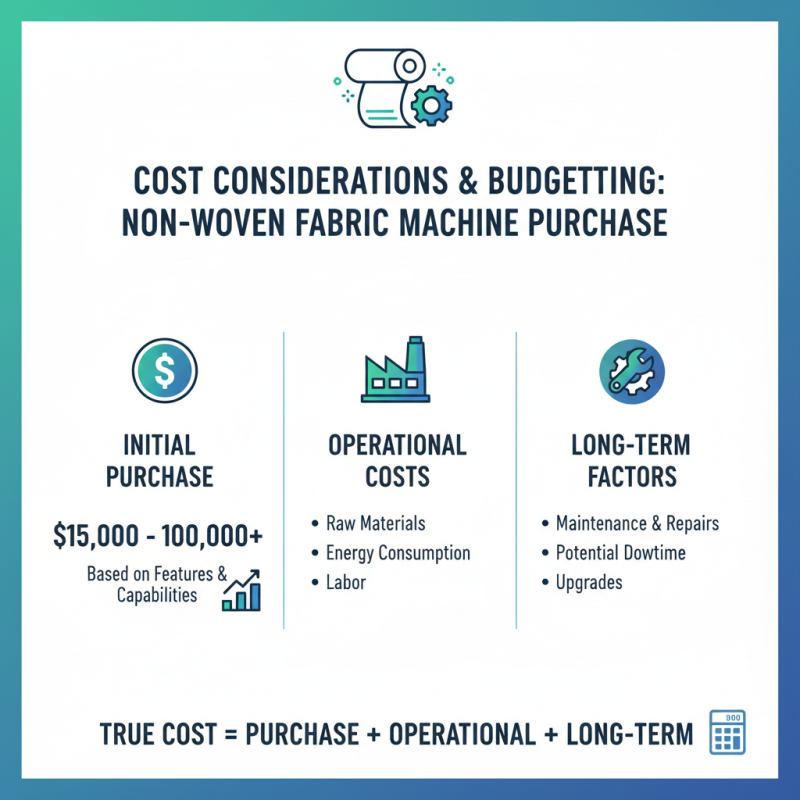
When considering the purchase of a non-woven fabric making machine, cost plays a crucial role. Reports from industry experts indicate that initial costs can range from $15,000 to over $100,000 based on features and capabilities. Budgeting for this machinery involves more than just the purchase price. Operational costs, maintenance, and potential downtime should be factored in to get a true understanding of the financial commitment.
Understanding the machine's functions helps determine its value. For instance, a machine that can produce various fabrics may justify a higher price. With the right machine, the return on investment (ROI) could be significant, potentially leading to increased production efficiency. It’s essential to conduct thorough research on suppliers to ensure reliable machines that will meet your needs.
Tip: Always factor in the costs of spare parts and training for operators. These can accumulate rapidly. Additionally, used machines can provide considerable savings. However, they may come with hidden issues that need careful examination.
Finding the best machine requires weighing cost against performance and reliability. Reports suggest that around 30% of machine buyers regret their initial choices due to unforeseen expenses. Investing in comprehensive training can mitigate this risk, as skilled operators can maximize efficiency and reduce operational costs in the long run.