Top Non Woven Supplier in China?
Finding the right non woven supplier in China requires more than comparing online prices. Product quality begins with the raw material, production discipline, and honest communication. A reliable partner should explain fiber composition, basis weight, tensile strength, elongation, air permeability, and production limits clearly. These details matter when a roll must run smoothly through a mask, hygiene, filtration, or packaging line.
Dr. Ian Butler, a respected nonwovens industry specialist, has stated, “Nonwovens are engineered materials, not simply fabrics.” This idea offers a practical way to evaluate Chinese manufacturers. A capable supplier should understand how spunbond, meltblown, SMS, needle-punched, and laminated materials perform in real applications. Factory experience matters. So does technical evidence. Ask for recent test reports, batch records, sample rolls, and traceability documents. Check whether the stated results match independent laboratory testing.
A factory visit can reveal small but important signs. Look for clean storage areas, calibrated instruments, labeled resin bags, and consistent roll packaging. Speak with the quality manager, not only the salesperson. Confirm minimum order quantities, lead times, defect procedures, and export experience in writing. Certifications can support confidence, but they never replace verification.
No supplier is perfect. Even experienced buyers sometimes overlook communication delays or changing specifications. That deserves reflection. The best choice is usually not the cheapest quotation. It is the non woven supplier that combines stable production, measurable performance, responsive service, and transparent limits. Such a partner helps reduce surprises after shipment and supports long-term product reliability.
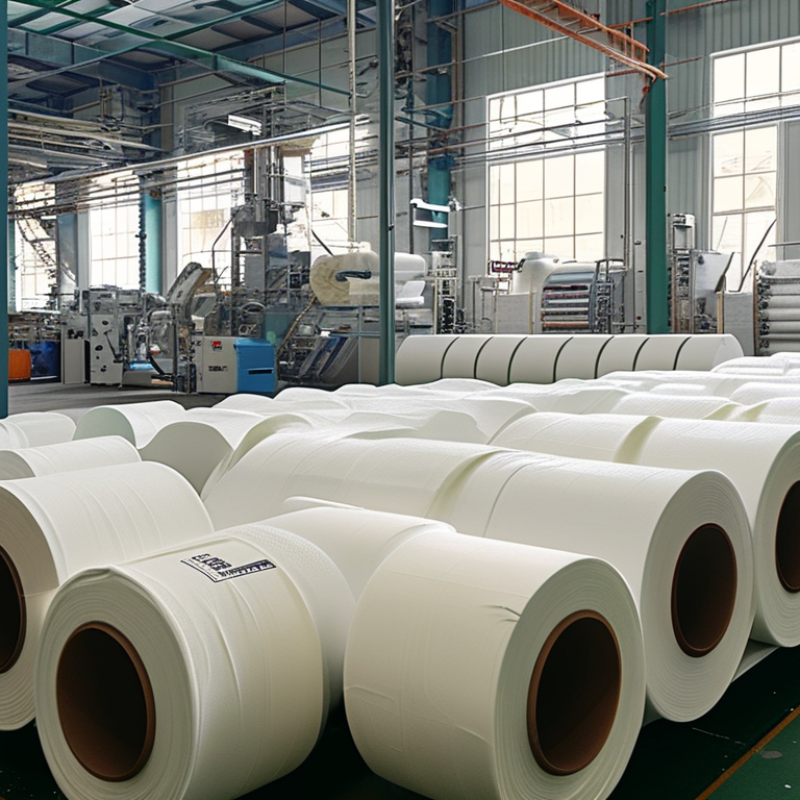
What Makes a Non-Woven Supplier a Top Choice in China?
A top non-woven supplier in China must offer more than competitive pricing. It needs stable production, measurable quality, and clear communication. Grand View Research valued the global nonwoven fabrics market at USD 53.4 billion in 2023. Its report also forecasts a 7.0% compound annual growth rate through 2030. This growth increases pressure on suppliers to deliver consistently.
Production experience becomes visible in small details. Reliable factories control fiber opening, web formation, bonding, moisture, and roll tension. They record batch numbers and retain samples for future checks. Buyers should request test data for basis weight, tensile strength, air permeability, and filtration performance. Independent laboratories can verify these results. Do not rely on attractive samples alone.
Traceability matters. So does flexibility. Smithers’ global nonwovens market analysis highlights expanding demand across hygiene, medical, filtration, construction, and transportation applications. A capable supplier should adjust materials without losing process control. It should explain limitations honestly. No factory is perfect. I would question any supplier promising zero variation. Small defects still happen, especially during large orders. The stronger partner detects them early, reports them clearly, and corrects the process. That practical honesty often separates a top choice from an ordinary manufacturer.
Key Types of Non-Woven Materials and Their Applications
Non-woven materials are engineered fabrics made without traditional weaving or knitting. Their structure supports many practical uses across healthcare, agriculture, construction, packaging, and home products.
Spunbond polypropylene offers strength, lightness, and steady airflow. It is common in shopping bags, hygiene layers, protective covers, and crop protection fabric.
Meltblown material uses very fine fibers for filtration. It often appears in air filters and selected medical products, where testing and controlled production matter.
Need more softness? Spunlace combines fiber webs with high-pressure water jets. Its cloth-like feel suits wipes, cleaning sheets, and personal care applications.
Different fibers create different performance. Polyester provides durability and dimensional stability. Viscose improves softness and absorbency. Polyethylene can support moisture resistance in specialized layers. A supplier should explain fiber content, basis weight, tensile strength, breathability, and barrier performance clearly. Samples should be tested under the actual temperature, load, and humidity conditions.
Application details change the best choice. A greenhouse cover needs light transmission and weather resistance, while a filtration layer needs stable pore control. Packaging may prioritize tear strength and printability.
In my experience, selecting only by price creates avoidable failures. The cheapest roll may shed fibers, stretch unevenly, or require extra processing. No material is perfect. Some biodegradable options still need suitable disposal systems, and claims should be verified through reliable test reports.
How to Evaluate Chinese Non-Woven Suppliers
Choosing a top non-woven supplier in China requires more than comparing factory prices. Evaluate practical evidence, not polished presentations. Ask how long the factory has produced your material, such as spunbond, meltblown, or needle-punched fabric. Request production photos, equipment details, and recent quality records. A reliable supplier should explain fiber composition, basis weight, tensile strength, elongation, and air permeability clearly.
Sample testing matters. Send the same specification to several suppliers and compare thickness, surface feel, roll winding, and weight consistency. Check whether the sample matches the mass-production promise. Request independent test reports when performance affects medical, filtration, hygiene, or construction use. Confirm the testing method and report date. A certificate alone proves little. Audit the factory, remotely or in person, and review incoming-material control, in-process inspection, and final packing. Small details matter, including roll labels and moisture protection.
Tips: Use a written specification sheet. Include tolerance limits, core size, roll length, packaging, and inspection rules. Ask for a trial order before signing a large contract. Notice response quality, not only response speed. Vague answers may signal weak control. I have found that even experienced buyers overlook batch variation during peak seasons. That mistake is costly. Keep a retained sample from every approved batch, and record complaints with photos, measurements, and production dates. A strong supplier welcomes these checks, admits limitations, and improves its process with documented action.
Top Non-Woven Supplier in China? How to Evaluate Chinese Non-Woven Suppliers
Recommended weighting for a 100-point non-woven supplier evaluation scorecard
Quality and compliance receive the highest weighting because non-woven materials must consistently meet agreed specifications, safety requirements, and applicable testing standards. Production capacity, lead-time reliability, total cost, and sustainability provide a balanced view of a supplier’s operational and commercial suitability. These are evaluation priorities, not performance data for any specific company.
Manufacturing Standards, Quality Control, and Certifications
Top Non Woven Supplier in China?
Manufacturing Standards, Quality Control, and Certifications
A capable non woven supplier should control quality from fiber preparation to final packing. Production begins with approved raw materials, calibrated machines, and documented operating procedures. Operators check web uniformity, thickness, weight, tensile strength, and elongation during production. These measurements reveal problems before large batches are completed.
Traceability matters. Each roll should carry a batch number, production date, material code, and inspection record. A professional quality team also tests moisture, color consistency, odor, and surface defects. For medical, hygiene, filtration, or packaging applications, testing requirements may differ significantly. Clear specifications prevent assumptions between the supplier and buyer.
Certifications provide useful evidence, but they are not automatic proof of every shipment’s quality. ISO 9001 can demonstrate a structured quality management system. ISO 14001 may support environmental management practices. Product-specific certifications, such as skin-contact or food-contact compliance, require separate verification. Certificates should be current, traceable, and issued by recognized independent bodies.
Factory audits add practical insight. Visitors can review laboratories, quarantine areas, calibration labels, and corrective-action records. The quiet details often matter most. Records expose gaps. A supplier may pass an audit yet still need stronger process discipline. That weakness should be discussed openly, not hidden behind paperwork. Sample approval, pre-shipment inspection, and retained samples create additional control points for long-term cooperation.
| Evaluation Area | Manufacturing or Quality Dimension | Applicable Standard or Reference | Typical Data or Acceptance Target | Recommended Verification Method | Priority |
|---|---|---|---|---|---|
| Management System | Quality management system | ISO 9001:2015 | Documented procedures for purchasing, production, inspection, calibration, nonconformity control, and corrective action. | Review a valid certificate, audit scope, certificate validity, and recent internal or external audit records. | Essential |
| Environmental Control | Environmental management | ISO 14001:2015 | Controls for energy use, waste, emissions, wastewater, chemical handling, and environmental objectives. | Check the certificate scope, environmental permits where applicable, waste records, and improvement objectives. | Important |
| Worker Safety | Occupational health and safety | ISO 45001:2018 | Risk assessment and controls for production machinery, fibers, chemicals, noise, fire, and emergency response. | Review certification status, safety training records, emergency drills, and machine-safety procedures. | Important |
| Material Inspection | Polymer, fiber, additive, and color consistency | Approved raw-material specification | Each incoming lot should have traceable supplier information, lot identification, appearance checks, and required technical documentation. | Verify incoming inspection reports, certificates of analysis, retained samples, and lot-to-lot traceability. | Essential |
| Fabric Weight | Mass per unit area, or GSM | ISO 9073-1 or ASTM D3776 | Common commercial specifications range from approximately 15 to 250 g/m², depending on the intended application. The contract tolerance should be product-specific. | Condition samples when required, cut specimens from multiple locations, weigh them with a calibrated balance, and calculate g/m². | Essential |
| Mechanical Performance | Breaking strength and elongation | ISO 9073-3 or ASTM D5034 | Acceptance values depend on fiber type, bonding method, direction, and end use. Machine direction and cross direction should be specified separately. | Test samples in both machine and cross directions using a calibrated tensile-testing machine and a documented sampling plan. | Essential |
| Surface Durability | Abrasion resistance | ASTM D4966 or an agreed equivalent method | Required abrasion cycles should be established according to the application, such as apparel, upholstery, filtration, or medical use. | Use the same abradant, load, pressure, endpoint, and conditioning procedure for every comparative test. | Application-Based |
| Dimensional Stability | Shrinkage and width variation | Customer specification and agreed test procedure | Typical commercial purchase specifications often set shrinkage limits between 1% and 5%, but the correct limit depends on the process and final use. | Mark reference points, expose specimens to the agreed washing, heat, or conditioning cycle, and calculate dimensional change. | Important |
| Appearance Control | Uniformity, holes, streaks, contamination, and roll defects | Approved visual-inspection standard | No critical holes, severe streaks, oil contamination, foreign fibers, edge damage, or unacceptable bonding defects within the agreed inspection area. | Inspect under controlled lighting, define defect limits before production, and record roll length, defect location, and severity. | Essential |
| Traceability | Roll, batch, and production-record control | ISO 9001:2015 process-control principles | Every finished roll should be linked to a production date, line, material batch, operator or shift, inspection result, and packing record. | Conduct a traceability test from a finished roll back to raw materials and forward to shipment documentation. | Essential |
| Chemical Compliance | Restricted substances and product safety | Applicable market regulations, including REACH or RoHS where relevant | Restricted substances must remain below the applicable legal or customer limits; the exact list depends on destination market and product use. | Review chemical declarations and perform risk-based laboratory testing for dyes, finishes, heavy metals, formaldehyde, or other specified substances. | Market-Specific |
| Sterile or Medical Use | Bioburden, cleanliness, and medical-device controls | ISO 13485:2016 and applicable medical-product requirements | Medical applications require documented risk management, controlled production, validated processes, and product-specific microbiological or cleanliness limits. | Verify certification scope, validation records, environmental controls, microbiological test reports, and regulatory documentation. | Application-Based |
| Fire Performance | Flammability and flame-spread behavior | Destination-market fire-test standard | Performance requirements vary significantly for building materials, transport interiors, furniture, protective clothing, and household products. | Use an accredited laboratory and test the finished construction, including coatings, laminates, adhesives, and backing materials where applicable. | Application-Based |
| Packaging and Logistics | Roll protection, labeling, and moisture control | Approved packing specification | Packaging should protect fabric from moisture, dust, compression, edge damage, and identification loss during handling and transportation. | Inspect packaging materials, roll dimensions, net and gross weight, labels, pallet condition, and container-loading photographs. | Important |
| Pre-Shipment Inspection | Final product release | Approved inspection and sampling plan | Shipment should be released only when appearance, GSM, width, roll length, packaging, documentation, and agreed laboratory results meet the purchase specification. | Apply a documented sampling plan, such as an agreed AQL procedure, and retain signed inspection records and reference samples. | Essential |
Ordering Process, Pricing Factors, and Supplier Support
Top Non Woven Supplier in China?
A reliable ordering process starts with a precise product brief. Share the fabric type, width, weight, color, roll length, and intended application. Include monthly demand and destination port. A supplier should confirm technical details before quoting. Ask for a physical sample, not only photographs. Test softness, tensile strength, thickness, and color consistency. Small sample costs can prevent expensive production errors. Clear specifications matter.
Pricing depends on more than fabric weight. Resin type, production width, dyeing, printing, packaging, and order quantity all affect the final figure. Freight terms also change the landed cost. Request a written quotation with currency, payment terms, lead time, and validity period. Compare equivalent specifications. A cheaper quote may exclude packaging or inspection. That mistake is common.
Supplier support becomes important after payment. Strong communication includes a production schedule, approval samples, inspection records, and shipment updates. Ask how the supplier handles uneven rolls, shade variation, or delayed delivery. A practical supplier should explain corrective action, rather than promise perfection. I have learned that fast replies do not always mean strong control. Documentation reveals more. Confirm export paperwork and product test reports before dispatch. Keep approved samples for future comparison.
Who checks the rolls at the factory?
Related Posts
-
Why Is the Non Woven Fabric Industry Growing Rapidly?
-

Why Non Woven Fabric Manufacturers Are Key to Sustainable Industry Solutions
-

How to Choose the Best Non Woven Fabric for Your Projects
-

Why Non Woven Fabric is Revolutionizing Industries and Everyday Products
-

How to Choose the Best Non Woven Fabric for Your Projects
-
Top Non Woven Supplier Options for Your Business Needs?