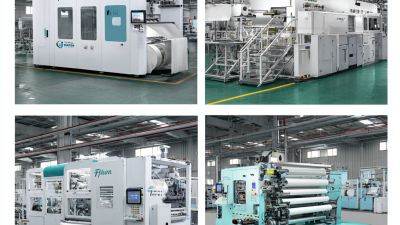
Top Non Woven Cutting Machine Suppliers Worldwide
Choosing among the top non woven cutting machine suppliers worldwide requires more than comparing catalog prices. A reliable machine must cut cleanly through lightweight spunbond, dense felt, or laminated rolls without pulling the web. Small details matter. Blade alignment, servo control, dust removal, and tension stability can decide whether production runs smoothly.
Dr. Behnam Pourdeyhimi, a respected nonwovens researcher, has said, “Performance comes from understanding the material, not merely processing it.” This principle is useful when reviewing global suppliers. A machine designed for medical fabric may not suit automotive insulation or filtration media. Buyers should examine cutting width, speed under real loads, changeover time, spare-part access, and technical training. A polished brochure proves little.
Experience on the factory floor also matters. Operators notice vibration, noisy bearings, uneven edges, and awkward cleaning points. These issues rarely appear in promotional photographs. Strong suppliers provide test cuts, measurable tolerances, maintenance guidance, and responsive after-sales support. Certifications and published specifications should be checked independently where possible.
No ranking is perfect. Supplier performance can vary by region, project size, and material formulation. Some data remains difficult to compare. That is worth admitting. Still, this guide identifies manufacturers that show credible engineering capability, consistent quality, and practical customer support. The best choice is not always the fastest machine. It is the one that delivers repeatable cuts, manageable operating costs, and dependable production after installation.
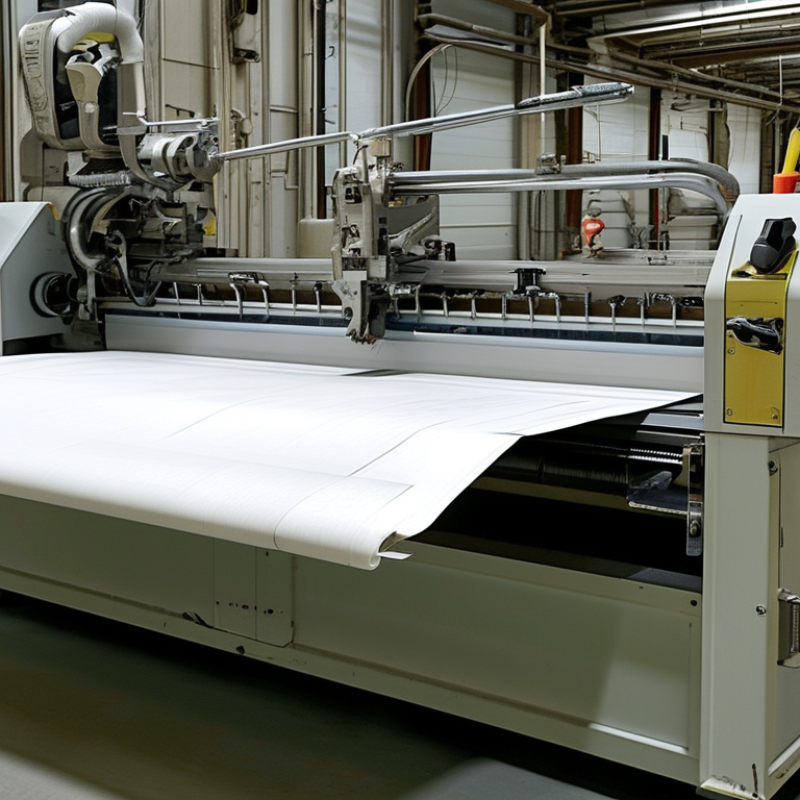
What Is a Non-Woven Cutting Machine?
A non-woven cutting machine converts rolls or sheets into controlled widths, lengths, or custom shapes. It usually combines unwinding, tension control, slitting, cross-cutting, and material collection. Rotary blades handle continuous production, while servo-driven systems improve length accuracy. Some models also use ultrasonic cutting for sealed edges and reduced fraying.
Demand is expanding with hygiene, medical, packaging, and filtration applications. Grand View Research reports that the global nonwoven fabrics market reached approximately USD 53.81 billion in 2023. The same report forecasts a 7.2% compound annual growth rate from 2024 to 2030. More output creates greater pressure on cutting accuracy. Small errors can produce uneven stacks, wasted rolls, or weak product edges.
Look closely at actual machine trials. A supplier should test your fabric weight, thickness, elasticity, and coating. Ask for cutting tolerance, maximum web width, line speed, blade-life data, and adjustment time. Smithers’ The Future of Nonwovens to 2029 also identifies continued growth in technical and hygiene nonwovens, but market forecasts are not guarantees. A faster machine may still perform poorly with soft, stretchy material. That detail matters. Operators should inspect the cut edge, noise level, dust control, and emergency protection during testing. The best specification is rarely the longest one.
How Non-Woven Cutting Machines Work
Non-woven cutting machines convert continuous fabric rolls into accurate sheets, strips, or custom shapes. The process begins with an unwinding unit. It releases the roll while tension sensors prevent wrinkles and stretching. A web-guiding system keeps the material centered. Even a small alignment error can multiply across thousands of pieces.
The cutting section then uses rotary blades, straight knives, ultrasonic tools, or dies. Selection depends on fiber type, thickness, elasticity, and production speed. Servo motors control feed length and cutting timing.
Optical sensors can detect edges, printed marks, and damaged areas. Some systems automatically adjust pressure when the fabric changes. That feature reduces waste, although it cannot correct every unstable roll.
The numbers explain the demand. Grand View Research valued the global non-woven fabric market at about USD 53.5 billion in 2023. Its report projects continued growth through 2030, supported by medical, filtration, hygiene, and industrial applications. Smithers also forecasts expansion in global non-wovens consumption during its 2024–2029 outlook.
Definitions differ between reports, so comparisons require care. A machine’s advertised speed may also hide setup time, blade changes, and rejected material. Real efficiency should include usable output per hour. Operators should record tension, cut accuracy, downtime, and scrap before selecting equipment. Small trials often reveal problems that brochures miss.
Key Criteria for Comparing Global Suppliers
Top Non Woven Cutting Machine Suppliers Worldwide
Key Criteria for Comparing Global Suppliers
When comparing global suppliers, examine cutting performance before catalog promises. Request samples using your actual non woven material, thickness, width, and roll tension. Inspect edge cleanliness under strong light. Frayed edges often reveal poor blade control or unstable feeding.
A reliable supplier should explain blade materials, cutting tolerances, speed ranges, and compatible production lines. Ask for measured results, not vague claims. Review machine frames, tension systems, motor controls, and dust management. Small details matter. A loose guide can damage an entire roll.
Supplier experience also appears in commissioning support. Check installation procedures, operator training, troubleshooting manuals, and spare-part availability in your region. Clear electrical specifications reduce delays between shipment and production. Independent certifications and documented factory testing strengthen credibility, but paperwork cannot replace a practical trial.
Compare total ownership costs, not only purchase prices. Include energy use, blade replacement, maintenance labor, shipping, and downtime risks. A lower quotation may become expensive after repeated adjustments. I have found that response speed matters, although it is difficult to measure fairly. Ask several technical questions and record how precisely each supplier answers. One weakness remains: test conditions rarely match every factory. Recheck performance after extended running, when heat, dust, and operator habits expose problems.
Key Criteria for Comparing Non-Woven Cutting Machine Suppliers
This practical evaluation model allocates a 100-point purchasing weight across the factors most relevant to global buyers: product quality and compliance, cutting precision, production throughput, after-sales support, total cost of ownership, and delivery capability. The percentages are category weights rather than company or brand data.
Leading Non-Woven Cutting Machine Suppliers by Region
Top Non Woven Cutting Machine Suppliers Worldwide: Leading Suppliers by Region
Regional suppliers often understand local fabric needs better than distant exporters. East Asian manufacturers commonly offer high-speed rotary and ultrasonic cutting systems. Their strengths include automation, compact layouts, and competitive production costs. European suppliers often focus on precision, safety engineering, and energy control. Their machines suit technical textiles, medical materials, and repeatable industrial work. North American suppliers usually provide strong integration support for conveyors, inspection units, and factory software. South Asian suppliers can offer practical configurations for growing plants and flexible order volumes.
Supplier quality varies within every region. A polished website proves very little. Ask for cutting samples using your actual non-woven roll, thickness, and fiber blend. Check edge quality under bright light. Inspect dust levels, blade changes, tension control, and emergency access. Request service response times and spare-part availability in writing. A low quotation may seem attractive, but downtime can erase the saving quickly. I would also compare power requirements and operator training, because these details are easy to overlook.
Tips: Visit a working installation when possible. Measure finished edges, not only machine speed. Confirm warranty limits, software support, and delivery terms. Keep one trial result for comparison. Even experienced buyers can judge too early.
| Region | Major Manufacturing and Supply Hubs | Common Non-Woven Cutting Equipment | Typical Web-Width Range | Typical Operating-Speed Range | Frequently Processed Materials | Key Application Sectors | Common Buyer Requirements |
|---|---|---|---|---|---|---|---|
| East Asia | China, Japan, South Korea and Taiwan | Automatic slitter rewinders, ultrasonic cutters, rotary die cutters, cross-cutting lines and CNC knife systems | 600–3,200 mm | 30–250 m/min | Spunbond, meltblown, SMS, spunlace, needle-punched and laminated non-wovens | Medical products, hygiene goods, filtration, packaging, agriculture and automotive interiors | High automation, customized web widths, servo control, rapid changeover and competitive production cost |
| Europe | Germany, Italy, France, Spain, Türkiye and Central Europe | Precision slitting systems, rotary cutters, laser cutting equipment, die-cutting presses and integrated inspection lines | 800–3,500 mm | 40–220 m/min | Spunbond, spunlace, needle-punched, thermal-bonded and coated non-wovens | Industrial filtration, construction, automotive, geotextiles, medical and premium consumer products | High dimensional accuracy, safety guarding, energy efficiency, traceability and CE-oriented machine design |
| North America | United States, Canada and Mexico | Heavy-duty roll slitters, automated bag and sheet cutters, die cutters, edge-trim systems and integrated packaging lines | 1,000–4,000 mm | 40–200 m/min | Spunbond, meltblown, composite laminates, felt and filtration-grade non-wovens | Construction, filtration, healthcare, protective products, automotive and industrial packaging | Robust construction, North American electrical configurations, remote diagnostics and high uptime |
| South Asia | India, Bangladesh and Pakistan | Roll-to-roll slitters, manual and automatic sheet cutters, ultrasonic edge cutters and compact die-cutting machines | 600–2,500 mm | 20–150 m/min | Spunbond polypropylene, spunlace, needle-punched felt and laminated non-wovens | Shopping bags, hygiene products, agriculture, furniture, medical disposables and construction materials | Flexible configurations, lower operating cost, simple maintenance and compatibility with local power systems |
| Southeast Asia | Vietnam, Thailand, Indonesia, Malaysia and the Philippines | Automatic roll cutters, slitter rewinders, ultrasonic cutting units, bag-making cutters and compact production lines | 600–2,800 mm | 25–180 m/min | Spunbond, SMS, meltblown, spunlace and laminated polypropylene non-wovens | Healthcare, hygiene, reusable bags, agriculture, filtration and consumer packaging | Space-efficient layouts, multilingual controls, moderate capital cost and easy operator training |
| Middle East and Africa | United Arab Emirates, Saudi Arabia, Egypt, South Africa and North Africa | Heavy-duty slitting machines, cross-cutters, bag-cutting systems and customized converting equipment | 800–3,000 mm | 20–160 m/min | Spunbond polypropylene, needle-punched felt, geotextiles and laminated non-wovens | Construction, agriculture, infrastructure, packaging, filtration and healthcare supplies | Dust-resistant design, durable components, regional service support and suitability for continuous production |
| Latin America | Brazil, Mexico, Argentina, Colombia and Chile | Roll slitters, sheet cutters, rotary die cutters, ultrasonic cutters and semi-automatic converting lines | 600–2,600 mm | 20–150 m/min | Spunbond, meltblown, spunlace, needle-punched and composite non-wovens | Medical supplies, agriculture, construction, packaging, filtration and automotive components | Flexible batch production, practical automation, accessible spare parts and local technical support |
| Oceania | Australia and New Zealand | Compact slitter rewinders, precision sheet cutters, die cutters and specialized filtration-media cutters | 600–2,400 mm | 20–140 m/min | Spunbond, needled felt, filtration media, geotextiles and laminated non-wovens | Mining, agriculture, water filtration, construction, healthcare and environmental protection | Small-to-medium batch flexibility, safety compliance, remote monitoring and low-maintenance operation |
How to Select and Evaluate a Reliable Supplier
Top Non Woven Cutting Machine Suppliers Worldwide: How to Select and Evaluate a Reliable Supplier
Supplier selection should begin with production evidence, not attractive brochures. Smithers’ The Future of Global Nonwovens to 2028 projects strong growth in global nonwoven demand, increasing pressure on cutting accuracy and uptime. Ask each supplier for a recorded trial using your actual material, such as 40 gsm spunbond fabric or a laminated roll. Check edge quality, roll tension, cutting speed, and waste percentage.
Look closely at measurable specifications. A dependable supplier should state maximum roll diameter, usable width, blade life, speed tolerance, and power requirements. Request factory acceptance test records and calibration documents. ISO 9001 certification can support process control, but it does not guarantee excellent machine performance.
See the evidence.
Grand View Research identifies automation and production efficiency as major nonwoven industry trends. Therefore, evaluate control systems, fault alerts, recipe storage, and remote diagnostic options. Ask how quickly replacement blades, sensors, and belts can arrive in your region. A low purchase price may become expensive after one unexpected stoppage.
Visit the facility, if possible. Watch an operator change a roll. It should not feel improvised. Speak with two recent customers, not only reference clients selected by the supplier. My own evaluation would include a written scoring sheet, though personal judgment still creates blind spots. Leave room for doubt. That is healthier than trusting polished demonstrations.
Related Posts
-
2025 How to Choose the Best Non Woven Cutting Machine for Your Needs
-
Best Non Woven Cloth Cutting Machine for Your Business Needs?
-
How to Choose the Best Non Woven Cloth Cutting Machine for Your Needs?
-
How to Choose the Best Non Woven Cloth Cutting Machine for Your Needs?
-
Top 10 Benefits of Non Woven Cloth Cutting Machines for Your Business?
-
Top 10 Benefits of Using Non Woven Cutting Machines for Your Business?