Top Non Woven Fabric Machine Manufacturers Worldwide
The global nonwoven industry is expanding across hygiene, medical, filtration, automotive, construction, and agricultural applications. Smithers’ market studies identify continued demand for spunbond, meltblown, spunlace, and needlepunch materials, driven by healthcare consumption and lighter industrial products. Grand View Research also reports steady growth in the global nonwoven fabrics market, although forecasts vary by region, technology, and application.
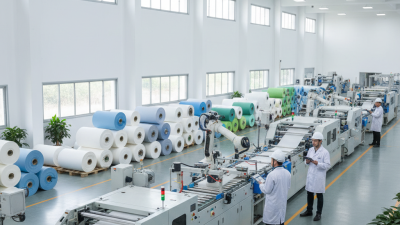
Behind every roll is a non woven fabric machine operating under strict process conditions. Web uniformity, fiber distribution, line speed, energy use, and maintenance access directly affect production quality. A machine may look impressive in a showroom. It must still perform during long shifts, material changes, and unexpected humidity. That practical test is often overlooked.
This guide examines leading non woven fabric machine manufacturers worldwide through equipment capability, technical support, customization, and operating reliability. Companies producing spunbond lines may differ greatly from suppliers specializing in needle-punch or thermal-bonding systems. MarketsandMarkets research highlights the importance of hygiene and filtration applications, where consistency and controlled production are essential. The figures are useful, but they are not perfect. Forecasts can change when energy prices, raw-material costs, or regional investment patterns shift.
Real purchasing decisions require more than a catalog comparison. Engineers should inspect trial data, production references, spare-parts response, and operator training. A faster line is not automatically a better line. Sometimes, stable output matters more. This introduction provides a practical starting point for comparing manufacturers, while recognizing that factory conditions can produce very different results.
What Is a Non-Woven Fabric Machine?
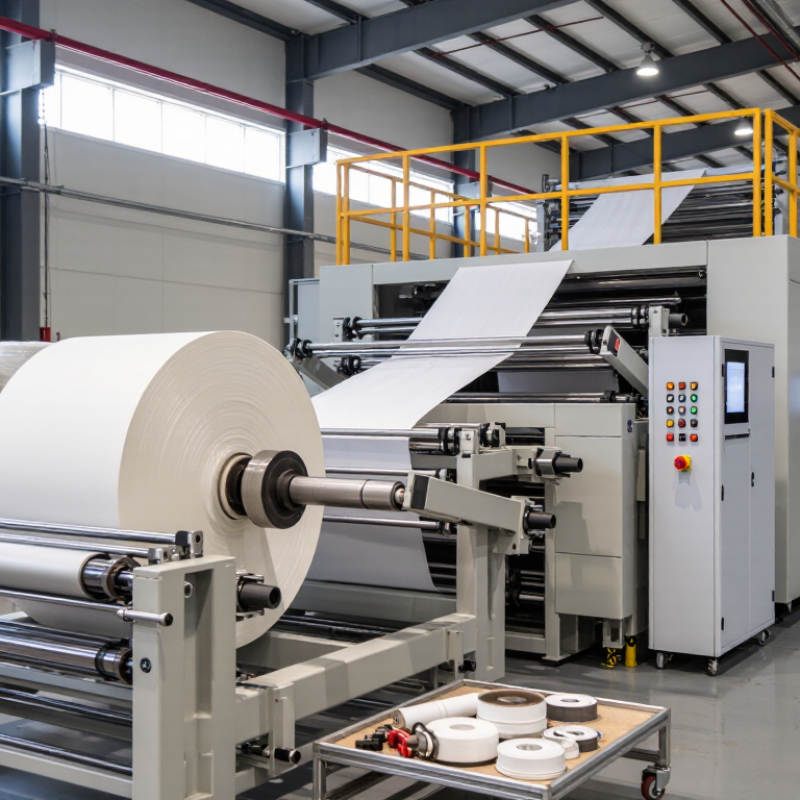
A non-woven fabric machine forms fabric without weaving or knitting yarns. It arranges loose fibers into a web, then bonds them through heat, pressure, chemicals, water jets, or mechanical entanglement. The machine may include fiber openers, carding units, web formers, bonding chambers, dryers, and winding systems.
Different technologies create different performance profiles. Spunbond lines melt polymer chips and draw continuous filaments into a web. Meltblown systems produce much finer fibers, often for filtration media.
Needlepunch machines repeatedly push barbed needles through layered fibers, creating felt-like materials for automotive interiors, insulation, and geotextiles. A practical operator checks web weight, moisture, tensile strength, and uniformity during production. Small process changes matter.
Market data explains the equipment’s importance. Grand View Research estimated the global nonwoven fabric market at about USD 53.6 billion in 2023, with continued growth expected through 2030. Smithers has also identified hygiene, filtration, healthcare, and construction as major demand areas. These figures describe fabric demand, not machine sales, so they should not be treated as identical measures. That distinction is easy to miss.
In real factories, machine selection depends on fiber type, target GSM, production speed, energy use, and maintenance access. A high-speed line is not automatically efficient. It may create more waste when settings are poorly controlled. Experienced manufacturers therefore test samples, inspect bonding strength, and review lifecycle costs before final installation. The best decision is rarely the most dramatic one.
Key Machine Types and Production Processes
Non Woven Fabric Machine Manufacturers Worldwide: Key Machine Types and Production Processes
Non woven fabric production begins with selecting a machine that matches the required strength, softness, and filtration performance. Spunbond lines melt polymer chips, extrude continuous filaments, and spread them across a moving conveyor. Airflow then forms an even web. A heated calender bonds the fibers with controlled pressure and temperature. Small temperature changes can alter fabric softness.
Meltblown machines use finer dies and high-speed hot air to create microfibers. Operators must watch air pressure, die cleanliness, and fiber distribution closely. One blocked nozzle can leave a visible weak strip. Needle-punch machines process staple fibers through carding, cross-lapping, and repeated needle penetration. This method suits automotive interiors, geotextiles, and durable padding. Spunlace lines use high-pressure water jets instead of adhesive bonding, producing flexible fabrics with a textile-like surface.
Production accuracy depends on more than the main machine. Unwinders, fiber feeders, web formers, ovens, slitters, and winding units must work together. Inline sensors can measure basis weight and web tension, while laboratory checks confirm thickness, tensile strength, and air permeability. Experienced manufacturers also design cleaning access and quick-change components for shorter downtime. Yet no process is perfect. Recycled feedstock may vary in color or melt flow, forcing operators to adjust speed and temperature. Careful records, practical trials, and honest maintenance planning remain essential when comparing global machine suppliers.
Top Non Woven Fabric Machine Manufacturers Worldwide - Key Machine Types and Production Processes
| Machine Type | Primary Production Process | Typical Raw Materials | Typical Product Weight | Common Working Width | Typical Production Capacity | Main Applications | Important Machine Features |
|---|---|---|---|---|---|---|---|
| Spunbond Nonwoven Line | Polymer extrusion, melt spinning, web laying and thermal calendaring | Polypropylene, polyester and biodegradable polymer blends | 10–250 g/m² | 1.6–6.4 m | Approximately 1–20 t/day, depending on polymer, width and basis weight | Hygiene products, medical gowns, agricultural covers, shopping bags, filtration and geotextiles | Continuous filament spinning, adjustable basis weight, online web monitoring and heated calendar rolls |
| Meltblown Nonwoven Line | Polymer extrusion, high-speed hot-air attenuation and microfibre web formation | Primarily polypropylene; selected polyester and specialty polymers | 10–200 g/m² | 1.6–3.2 m | Approximately 0.3–5 t/day | Air and liquid filtration, medical masks, absorbent materials and battery separators | Precision die assembly, hot-air system, electrostatic charging option and fine-fibre control |
| Spunmelt SMS/SMMS Line | Combination of spunbond and meltblown layers followed by thermal bonding | Polypropylene and functional polymer additives | 10–120 g/m² | 1.6–5.2 m | Approximately 1–15 t/day | Medical and hygiene barrier fabrics, protective apparel and cleanroom products | Multilayer production, integrated meltblown modules, automatic tension control and inline slitting |
| Needle-Punch Nonwoven Line | Fibre opening, carding, cross-lapping and mechanical entanglement with barbed needles | Polyester, polypropylene, recycled fibres, wool and natural fibre blends | 100–3,000 g/m² | 2–8 m | Approximately 0.5–8 t/day | Automotive interiors, carpets, filtration, insulation, civil engineering and synthetic leather bases | High needle density, adjustable stroke frequency, cross-lapper control and optional pre-needling |
| Thermal Bonding Line | Fibre web formation followed by bonding with heated air, calendering or through-air treatment | Polyester, polypropylene, bicomponent fibres and low-melt binder fibres | 20–500 g/m² | 2–6 m | Approximately 0.8–10 t/day | Hygiene cores, mattress padding, insulation, filtration and lightweight technical fabrics | Controlled bonding temperature, low-pressure surface treatment and uniform loft management |
| Hydroentanglement Line | Carding or spunlaid web formation followed by high-pressure water-jet entanglement | Viscose, polyester, polypropylene, cotton, wood pulp and blended fibres | 20–250 g/m² | 2–5 m | Approximately 0.5–8 t/day | Wet wipes, medical fabrics, hygiene products, filtration media and cleaning cloths | High-pressure water pumps, multi-manifold jet systems, vacuum dewatering and water recycling |
| Airlaid Nonwoven Line | Fibre defibration, air dispersion, web deposition and thermal or latex bonding | Fluff pulp, cellulose fibres, synthetic short fibres and superabsorbent materials | 40–1,000 g/m² | 1.5–4 m | Approximately 0.3–6 t/day | Absorbent cores, wipes, table coverings, filtration and specialty medical products | Controlled air distribution, precise dosing systems, embossing options and high absorbency control |
| Wetlaid Nonwoven Line | Fibre dispersion in water, slurry deposition, dewatering, pressing and drying | Cellulose, glass, mineral, aramid and synthetic short fibres | 10–500 g/m² | 1.5–4 m | Approximately 0.2–5 t/day | Battery separators, electrical insulation, filtration, tea bags and specialty papers | Slurry consistency control, forming-wire systems, vacuum drainage and precision drying |
| Coating and Laminating Line | Application of polymer, adhesive or functional coating followed by drying and lamination | Nonwoven substrates with polyethylene, polyurethane, hot-melt adhesive or acrylic coatings | 30–1,000 g/m² | 1.6–4 m | Approximately 20–150 m/min | Waterproof medical fabrics, roofing membranes, packaging, protective clothing and filtration composites | Gravure, knife or slot-die coating, controlled drying zones, laminating pressure and edge trimming |
| Slitting, Rewinding and Packaging Line | Finished-roll inspection, longitudinal slitting, tension-controlled rewinding and packing | Spunbond, meltblown, needle-punched, hydroentangled and laminated nonwoven rolls | Applicable to finished rolls of various weights | Up to approximately 6 m input width | Approximately 100–600 m/min | Standardized rolls for converters, medical suppliers, manufacturers and industrial users | Automatic edge guiding, servo tension control, defect inspection, core positioning and roll weighing |
The capacity, width and product-weight figures are representative industry ranges. Actual performance varies according to fibre type, polymer grade, basis weight, bonding method, line configuration, operating speed and product specifications.
How to Evaluate Non-Woven Fabric Machine Manufacturers
Evaluating non-woven fabric machine manufacturers requires more than comparing catalog prices. Begin with the product you actually plan to make. Spunbond, meltblown, needle-punched, and thermal-bonded lines require different configurations. Ask manufacturers for verified output, material ranges, energy consumption, and finished-width tolerances. Request a live production trial using your intended polymer or fiber. A polished showroom sample proves very little.
Inspect engineering depth through drawings, control-system details, and component specifications. The manufacturer should explain heating zones, filtration, web formation, winding, and fault protection clearly. Ask how quickly operators can change products and clean critical areas. Visit an operating factory if possible. Watch the line during startup, speed changes, and an emergency stop. Quiet machinery can still hide weak process control.
After-sales support deserves equal attention. Confirm installation training, spare-parts availability, remote diagnostics, and response times in writing. Speak with several existing users, including one with similar production volumes. Check inspection records, factory quality procedures, and applicable safety documentation. Do not judge reliability from a single successful reference. My own mistake was focusing too heavily on purchase price; maintenance delays later cost more than expected. A cheaper line may consume more electricity, waste more fiber, or require specialized technicians. Request a five-year ownership estimate, not only a quotation. Leave room for doubt. Specification gaps often appear after the contract, when changing them becomes difficult.
Top Non-Woven Fabric Machine Manufacturers Worldwide
The top non-woven fabric machine manufacturers worldwide are judged by more than production speed. Reliable manufacturers provide stable web formation, accurate fiber distribution, and consistent fabric weight. Their equipment should support spunbond, meltblown, needle-punched, or thermal-bonded production, depending on the factory’s needs. Experienced buyers inspect machine frames, control systems, heating zones, and maintenance access. A clean layout matters. It reduces delays when operators replace filters, belts, or rollers.
Technical support also separates strong manufacturers from ordinary suppliers. Clear installation guidance, operator training, spare-parts planning, and responsive troubleshooting build long-term trust. Buyers should request test data using similar polymers, fiber sizes, and fabric weights. Factory demonstrations can reveal vibration, uneven edges, noise, and waste levels. A polished brochure is not proof. Some promised outputs may change under real production conditions, so careful verification remains necessary.
Tips: Compare complete production costs, not only the machine price. Ask for energy use, output tolerance, service response times, and upgrade options. Check whether local technicians can support commissioning. Visit an operating line when possible. Watch the fabric surface closely. Small streaks or weak bonding may become expensive defects later. Also, leave room for honest doubt; the most suitable machine depends on product specifications, workforce skills, raw materials, and future capacity plans.
Industry Applications, Innovations, and Future Trends
Top nonwoven fabric machine manufacturers worldwide are judged by more than output speed. Their equipment serves hygiene products, medical barriers, air filters, road fabrics, automotive liners, and crop covers. Each application differs. Spunbond lines favor continuous filament strength, while meltblown systems create fine fibers for filtration. Needlepunch and hydroentanglement machines add different textures, absorbency, and mechanical performance. Reliable suppliers support trials, process training, safety controls, and measured quality checks. This support matters when fabric looks acceptable but fails after washing, heat, or pressure.
Recent innovations focus on precision and resource use. Servo-controlled drives stabilize web formation, while automated tension systems reduce wrinkles at higher speeds. Inline cameras can detect holes, streaks, and uneven basis weight before rolls leave the machine. Modern lines also recycle trim and monitor electricity, water, and compressed air. Digital twins are arriving. They help engineers test settings before installing expensive equipment. Automation has limits. Poor fiber preparation or weak maintenance can defeat sophisticated controls.
Future development will likely combine lower-carbon fibers, recyclable structures, and flexible equipment. Manufacturers are exploring bio-based polymers, solvent-free finishes, and mono-material designs for easier recovery. Energy-saving ovens and closed-loop water systems may become standard in resource-intensive plants. Traceability will link raw material batches with machine settings and laboratory results. Yet some pilot materials remain costly, inconsistent, or difficult to process. Testing remains essential. Buyers should compare verified output, maintenance access, changeover time, and lifetime energy demand, not brochure speed alone. An impressive machine can still disappoint on a difficult product.
Related Posts
-
How to Choose the Best Non Woven Fabric Machine?
-
Top Non Woven Fabric Machine Manufacturers Worldwide?
-
China Best Non Woven Equipment Supplier for Global Buyers
-
Top 10 Tips for Choosing Nonwoven Manufacturers for Your Business?
-
How to Choose the Best Non Woven Fabric for Your Projects
-
How to Choose the Best Non Woven Cloth Cutting Machine for Your Needs?