Request quote
Request a quote

    What Are the 2026 Top Types of Non Woven Material?

    In 2026, non woven material continues to shape healthcare, construction, agriculture, packaging, and everyday consumer products. Its fibers are bonded without traditional weaving, creating fabrics with different strengths, textures, and filtration behaviors. Spunbond remains important for durable covers, hygiene layers, and reusable shopping bags. Meltblown is still widely recognized for fine filtration, especially when manufacturers control fiber diameter and web uniformity carefully.

    Other leading types deserve attention. SMS combines spunbond and meltblown layers, offering a practical balance of strength, softness, and barrier performance. Needle-punched non woven material provides thickness and resilience for geotextiles, automotive interiors, carpets, and protective pads. Spunlace feels more textile-like because high-pressure water entangles the fibers. It appears in wipes, medical gowns, and personal-care products. Airlaid materials can hold liquids efficiently, making them useful in absorbent hygiene applications.

    Performance depends on more than the product name. Fiber selection, bonding method, weight, pore structure, moisture exposure, and end-use testing can change the result. Field experience often reveals details that laboratory samples miss, such as edge fraying, stiffness after storage, or reduced filtration when the material becomes damp. Reliable comparisons should reference technical data sheets, recognized testing methods, and documented supplier quality controls.

    The ranking is not absolute. Some 2026 predictions may age quickly as bio-based fibers, recyclable designs, and lower-energy production improve. A material that looks sustainable may still require careful lifecycle review. This guide examines the leading categories with practical evidence, while acknowledging that no single non woven material performs best in every application.
    What Are the 2026 Top Types of Non Woven Material?

    What Is Non Woven Material and How Is It Made?

    Non woven material is a fabric-like sheet made without weaving or knitting yarns. Instead, loose fibers are arranged into a web and bonded together. Manufacturers use natural fibers, synthetic fibers, or both. Heat, pressure, chemicals, water jets, or mechanical needles create the bond. The final sheet can feel soft like cotton or firm like thin cardboard.

    Production usually begins with fiber preparation and web formation. In spunbond production, melted polymer forms continuous filaments that cool on a moving belt. Meltblown equipment creates much finer fibers with hot air. Spunlace uses high-pressure water jets to entangle fibers. Needle-punched material receives repeated needle strokes. Airlaid systems spread short fibers through controlled airflow. Each method changes strength, texture, absorbency, and breathability.

    For 2026 applications, spunbond, meltblown, spunlace, needle-punched, and airlaid materials remain important choices. The best type depends on the product’s actual working conditions. A medical cover needs different performance from a filtration layer or a landscaping fabric.

    Technicians should check fiber content, basis weight, tear strength, pore structure, and cleanliness through reliable testing. Small process changes matter. A slightly uneven web can weaken an entire roll. Many descriptions oversimplify non woven fabric as automatically sustainable, but that is not always accurate. Its environmental impact depends on raw materials, additives, durability, and disposal conditions. More careful evaluation is still needed.

    How Are Non Woven Materials Classified by Manufacturing Process?

    What Are the 2026 Top Types of Non Woven Material?

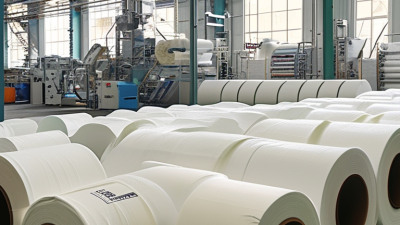
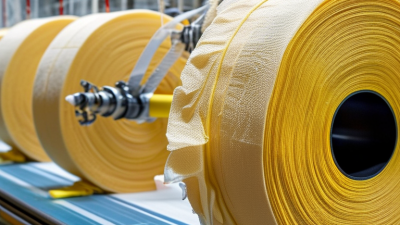
    Non woven materials are mainly classified by how their fibers become a web and gain strength. Spunbond materials form continuous filaments through extrusion, spreading them across a moving surface. Heat then bonds the fibers. This process creates strong, lightweight sheets for filtration, hygiene products, and protective packaging.

    Meltblown Meltblown materials use finer filaments and high-speed air. The result is a dense web with small pores. It is widely selected for filtration layers.

    Spunlace Spunlace uses high-pressure water jets to entangle fibers. Its surface feels soft, almost fabric-like.

    Needle-punched Needle-punched materials receive repeated needle penetration, which mechanically locks the fibers together. They suit carpets, drainage layers, and industrial fabrics.

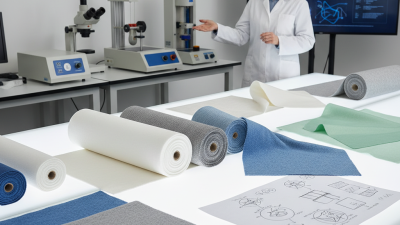
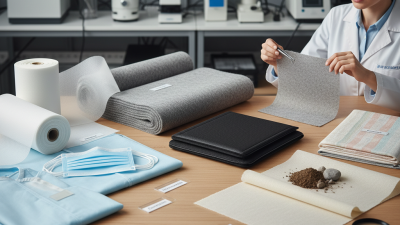
    Other types include thermal-bonded, wet-laid, and air-laid materials. Thermal bonding uses heat-sensitive fibers or powders, while wet-laid production disperses fibers in water before forming the sheet. Air-laid systems distribute dry fibers through controlled airflow. The difference is visible under inspection. Needle-punched sheets often show a textured surface, while spunbond sheets usually look more uniform.

    In practical quality checks, fiber direction, thickness, bonding strength, and surface defects matter. A material may look strong but separate under repeated flexing. Classification is useful, but it is not always perfectly clean. Some products combine two or more processes. That detail can change their performance, cost, and recycling considerations.

    What Are the Top Non Woven Material Types in 2026?

    In 2026, the top non woven material types depend on performance, application, and lifecycle goals. Spunbond remains popular for strong, lightweight sheets used in packaging, agriculture, and hygiene products. Meltblown offers very fine fibers and effective filtration, but it can be less durable without support layers. SMS combines both structures. It balances softness, barrier performance, and strength.

    Spunlace is another leading option for wipes, medical textiles, and personal-care applications. Its water-jet bonding creates a soft, fabric-like surface. Needle-punched non woven material provides thickness and resilience for filtration, automotive interiors, and geotextiles. Airlaid material feels absorbent and bulky, making it useful for pads and cleaning products. Bio-based and recycled-fiber nonwovens are gaining attention in 2026. Their environmental value depends on fiber sourcing, energy use, and disposal conditions. The label alone proves little.

    Tips: Match the material to the real stress. Test wet strength, lint, thickness, breathability, and sealing behavior. Ask for technical data and batch samples before placing a large order. In practical evaluations, a softer sheet may tear during converting. A thicker sheet may also increase waste. That detail is easy to miss. Specifications should be checked against actual production conditions, not only laboratory results. Consider worker handling, storage humidity, and end-use temperature. The best type is rarely the most advanced one; it is the one that performs consistently at the required cost.

    Which Industries Use Each Leading Non Woven Material Type?

    In 2026, nonwoven selection is increasingly driven by the job, not by a single “best” material.

    Spunbond polypropylene serves hygiene products, agriculture, packaging, and construction. Its continuous fibers create a light, tear-resistant web for crop covers, medical gowns, and protective building membranes. Meltblown, with finer fibers, appears in filtration, medical barrier layers, and industrial air systems. It can capture small particles effectively, but humidity and pressure drop may reduce practical performance. Testing matters.

    SMS combines spunbond strength with a meltblown center. Hospitals use it for isolation gowns and drapes, while clean manufacturing uses it for controlled-area garments. Spunlace uses water jets to entangle fibers, producing a soft, cloth-like sheet. Personal care, wound care, cosmetics, and household cleaning rely on it for wipes and absorbent pads. Fiber choice changes the result. Cellulose improves softness, while synthetic fibers can improve wet strength. Recyclability is not automatic.

    Needle-punched nonwoven materials serve automotive interiors, geotextiles, carpet underlay, and filtration because needling builds thickness and resilience. Airlaid webs are common in hygiene cores, food pads, and medical absorbent products, where even liquid distribution is important. Some applications still favor blends, despite sustainability pressure, because durability and moisture control can conflict. That trade-off deserves honest review. A material may look greener on paper yet perform poorly after repeated use. Engineers should compare basis weight, tensile strength, breathability, barrier behavior, absorbency, and end-of-life options under real operating conditions.

    How Should You Choose the Right Non Woven Material for an Application?

    In 2026, spunbond, meltblown, spunlace, and needle-punched fabrics remain leading non woven materials. Grand View Research valued the global non woven fabrics market at USD 53.8 billion in 2023. It also projects a 7.0% compound annual growth rate from 2024 to 2030. These figures show strong demand, but market growth does not make every material suitable.

    Start with the load. Spunbond offers strength, low cost, and stable dimensions for packaging, agriculture, and construction layers. Meltblown provides fine fibers and strong filtration, but it may need support during handling. Spunlace feels soft and absorbs liquids, making it useful for wipes and personal-care products. Needle-punched fabric handles thickness and impact well in automotive and civil applications. Smithers’ industry outlook identifies hygiene, medical, filtration, and construction as key demand areas through 2029.

    Check temperature, moisture, abrasion, chemical exposure, and expected service life. A laboratory tensile result can mislead when a wet sheet stretches during production. I have seen material choices fail because engineers tested only dry samples. Measure real failure. Ask for basis weight, air permeability, pore size, and fiber composition. Then test the finished product, not only the fabric roll. Keep samples. Compare performance after aging, folding, and repeated contact. The cheapest option can become expensive when dust release, tearing, or disposal problems appear. There is no perfect fabric. The correct choice balances performance, processing speed, safety, and total application cost.

    What Are the 2026 Top Types of Non Woven Material? - How Should You Choose the Right Non Woven Material for an Application?

    Comparison based on common fiber types, web-forming methods, performance characteristics, and typical application requirements.
    Material Type Typical Fiber or Polymer Main Manufacturing Method Key Performance Characteristics Common Applications Main Advantages Important Limitations Best Selection Conditions
    Spunbond Polypropylene, polyester, or polyethylene filaments Continuous filaments are extruded, drawn, laid into a web, and thermally bonded Good tensile strength, tear resistance, dimensional stability, and breathability; low to moderate filtration depending on structure Hygiene backsheet layers, medical gowns, agricultural covers, packaging, furniture and construction layers Efficient production, consistent quality, lightweight structure, and good strength-to-weight ratio Limited absorbency; standard grades may have lower softness and filtration than finer-fiber structures Choose it when strength, coverage, breathability, and cost efficiency are more important than high absorbency
    Meltblown Usually polypropylene microfibers High-velocity hot air attenuates extruded polymer into very fine fibers that form a web High surface area, fine pore structure, strong particle and aerosol capture potential, and good liquid barrier performance in suitable constructions Filter media, respirator and mask layers, oil-absorbent products, liquid barriers, and acoustic materials Excellent filtration potential and high coverage at low basis weight Lower mechanical strength and abrasion resistance than many spunbond structures; performance can be sensitive to handling and electrostatic charge Choose it when filtration, barrier performance, or high surface area is the primary requirement
    Spunbond-Meltblown-Spunbond (SMS) Typically polypropylene spunbond and meltblown layers Multiple non woven layers are bonded into a composite structure Combines outer-layer strength with an inner-layer barrier and filtration function; can provide useful breathability Medical protective apparel, surgical drapes, hygiene products, cleanroom garments, and industrial protective covers Balanced strength, liquid resistance, filtration, and wearer comfort More complex and costly than a single-layer web; performance depends on layer design and bonding quality Choose it when an application requires several functions at the same time, especially strength plus barrier protection
    Needle-Punched Polyester, polypropylene, recycled fibers, wool, or fiber blends Barbed needles mechanically entangle fibers through a fibrous web High thickness range, strong mechanical interlocking, good cushioning, sound absorption, and resistance to deformation in suitable grades Geotextiles, automotive liners, carpets, filtration supports, insulation, upholstery, and protective pads Versatile thickness, robust structure, high loft, and compatibility with recycled fibers Surface may be more fibrous; basis weight and thickness can increase shipping volume; not ideal for very fine filtration without additional treatment Choose it for cushioning, reinforcement, drainage, acoustic control, or heavy-duty mechanical applications
    Spunlace (Hydroentangled) Viscose, polyester, cotton, wood pulp, or blended fibers High-pressure water jets entangle fibers without conventional thermal bonding Soft hand, drapability, good surface absorbency, low lint potential in suitable grades, and moderate wet strength Wet wipes, dry wipes, cosmetic sheets, medical swabs, personal-care products, and cleaning cloths Textile-like feel, good liquid handling, and suitability for skin-contact products May require higher water and energy consumption during production; some cellulosic fibers lose strength when wet Choose it when softness, absorbency, drape, and a fabric-like feel are essential
    Thermal-Bonded Polyester, polypropylene, bicomponent fibers, or fiber blends Heat softens bonding fibers or thermoplastic regions to join the web Controlled stiffness, clean surface, dimensional stability, and adjustable strength depending on bonding pattern Hygiene components, apparel interlinings, packaging, filtration supports, automotive parts, and household products Precise bonding control, stable shape, and broad design flexibility Excessive heat or bonding can reduce softness, porosity, or elongation Choose it when stiffness, shape retention, clean processing, and controlled bonding are required
    Wet-Laid Cellulosic pulp, glass fibers, mineral fibers, synthetic staple fibers, or blends Short fibers are dispersed in water, formed into a sheet, dewatered, and bonded or dried Uniform formation, thin caliper, good surface area, and adaptable absorbency or filtration properties Battery separators, laboratory and industrial filtration, wipes, insulation, and specialty papers Excellent fiber dispersion and ability to combine different short-fiber materials Wet processing is more water-intensive; wet strength and dimensional stability may require binders or reinforcement Choose it for thin, uniform sheets, specialty filtration, or products requiring fine fiber distribution
    Melt-Spun Nanofiber Polymer systems capable of forming very fine fibers, including selected polyolefins and polyesters Specialized melt-spinning or related fine-fiber processes create submicron-scale structures Very high surface area, fine pore control, and high filtration potential at relatively low material weight Advanced air and liquid filtration, protective barriers, energy-related components, and high-performance separators Supports high efficiency and functional surface engineering Higher process complexity, narrower processing window, and possible need for a support layer Choose it when very fine filtration, low pressure drop, or advanced surface functionality justifies added process complexity

    Application-Based Material Selection Guide

    Application Priority Recommended Material Types Critical Properties to Check Practical Selection Notes
    High particle or aerosol filtration Meltblown, SMS, or fine-fiber composite structures Filtration efficiency, pressure drop, pore structure, loading capacity, and humidity stability Do not evaluate efficiency alone; airflow resistance and performance after handling are also important.
    Softness and liquid absorbency Spunlace or cellulose-containing wet-laid structures Absorption rate, retention capacity, wet strength, lint, skin feel, and drape Fiber selection strongly affects biodegradability, wet strength, and end-of-life options.
    Heavy-duty reinforcement or ground protection Needle-punched, spunbond, or laminated composite materials Tensile and tear strength, puncture resistance, creep, UV exposure, thickness, and permeability For outdoor use, confirm weathering performance rather than relying only on initial strength.
    Protective apparel and liquid barrier SMS, spunbond-film composites, or coated non woven structures Hydrostatic pressure resistance, seam integrity, breathability, tear strength, and wearer comfort Barrier performance must be tested on the complete garment or finished product, including seams and closures.
    Low cost and high-volume coverage Spunbond or thermal-bonded non woven Basis weight, tensile strength, uniformity, roll width, processability, and total cost per functional area Compare cost per finished function, not only price per kilogram.
    Sustainability and recycled content Recycled polyester, recycled polyolefin, cellulose-based, or mono-material designs Recycled content, durability, chemical additives, recyclability, carbon and water impacts, and disposal route Assess the complete life cycle and product design; a material claim alone does not guarantee lower environmental impact.
    Selection Checklist: Define the required function first, then compare fiber type, web-forming method, basis weight, thickness, pore size, tensile strength, wet performance, breathability, chemical resistance, temperature range, regulatory requirements, converting compatibility, and end-of-life route.